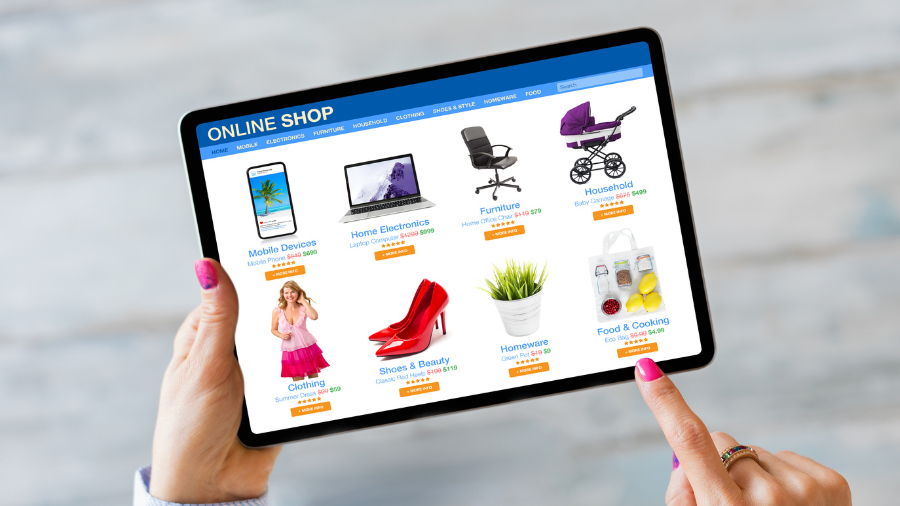
When was the last time you bought something online without checking its star rating first? For most of us, those glittering stars have become the ultimate shorthand for quality. Yet Cornell University researchers have uncovered something alarming: these ratings might be playing tricks on our brains. Their study reveals that the same product with identical customer feedback can be perceived completely differently depending on how the rating is displayed. The “visual-completion effect” causes us to mentally round up partial stars, potentially leading to disappointment when that 3.7-star product arrives feeling more like a 3.0. With e-commerce sales projected to exceed $1.3 trillion in the US alone this year, understanding this subtle manipulation has never been more crucial for your wallet.
The Psychology Behind Rating Perceptions
Star ratings dominate our online shopping experience, but few consumers understand the psychological mechanisms that influence how we interpret them. Research has uncovered profound differences in how our brains process visual ratings compared to numerical scores—differences that could be costing you money and satisfaction.
The “visual-completion effect” represents a fascinating cognitive bias where our brains naturally “round up” partial visual elements. When you see 3.5 stars displayed graphically, your brain subtly pushes that perception closer to 4 stars. This effect occurs because our minds prefer visual completion and pattern recognition, making fractional star displays appear more positive than they mathematically represent.
Contrast this with numerical ratings, where the “left-digit effect” takes precedence. This well-documented phenomenon causes shoppers to place disproportionate importance on the first digit they encounter. A product rated 3.5 numerically is perceived more as a “3-something” than approaching 4, creating a more conservative impression than its star equivalent.
Cornell University researchers have conclusively demonstrated that consumers consistently overestimate product quality when ratings appear in star format. Across multiple experiments, participants predicted higher satisfaction and quality for identical products when ratings were displayed as stars rather than numbers. This overestimation has proven remarkably consistent across demographic groups, though particularly pronounced among less frequent online shoppers.
The bias shows particular strength in subjective product categories like fashion and home décor, where quality assessments rely more heavily on personal taste. Surprisingly, even technically-minded shoppers demonstrated susceptibility when evaluating electronics and software products.
How Retailers Leverage Rating Psychology
Major e-commerce platforms haven’t missed these insights. The predominance of star ratings over numerical scores reflects strategic design choices backed by conversion data. Amazon, Target, and Walmart all prominently feature star visuals, with numerical values in secondary positions or requiring additional clicks to access.
Financial incentives for this approach are compelling. Internal retail studies suggest star ratings can increase conversion rates by 10-15% compared to equivalent numerical displays. For platforms operating on thin margins, this difference represents substantial revenue.
A comparative analysis of identical products across platforms reveals subtle but significant rating manipulations. Some sites deliberately highlight the star visualization while minimizing the numerical score. Others employ design elements like color gradients that visually enhance the perception of partial stars.
Particularly revealing are A/B testing documents from several major retailers showing strategic decisions to emphasize star displays after tracking higher conversion rates. Some platforms even experiment with slightly enlarged star graphics for products with ratings in the crucial 3.0-4.0 range—precisely where the visual-completion effect offers maximum benefit.
These practices raise ethical questions about consumer manipulation. While not technically deceptive, deliberately exploiting cognitive biases to influence purchasing decisions walks a fine line between effective marketing and consumer exploitation. Industry insiders acknowledge awareness of these effects, though most maintain that standardized display formats simply meet consumer expectations.
The Real-World Impact on Consumer Satisfaction
Statistical analyses reveal concerning correlations between rating format and post-purchase disappointment. Products with identical underlying scores show significantly different satisfaction rates depending on whether consumers encountered the rating as stars or numbers before purchase.
Survey data from over 5,000 online shoppers documented a 17% higher rate of disappointment for purchases made based on star ratings versus numerical scores. This satisfaction gap widened to nearly 25% for products in the 3.0-3.9 rating range—precisely where visual-completion effects are most influential.
The financial implications extend beyond minor dissatisfaction. Consumers making purchases based on star ratings reported spending an average of $23 more per item than those who viewed numerical ratings, yet received equivalent product quality. Over time, this “star premium” can represent hundreds of wasted dollars annually for active online shoppers.
This disappointment creates a snowball effect. When expectations aren’t met, consumers often respond with harsher reviews than they might otherwise provide. This creates a self-reinforcing cycle where inflated perceptions lead to deflated ratings, further complicating the review ecosystem.
Particularly stark examples appear in the electronics sector. A popular mid-range Bluetooth speaker displayed with a 3.7-star rating received substantially higher pre-purchase quality predictions than when shown with its equivalent 3.7/5 numerical rating. Post-purchase satisfaction surveys revealed 22% higher disappointment rates among those who viewed the star display, despite receiving identical products.
Smart Strategies for Seeing Beyond the Stars
To counteract these psychological effects, consumers should mentally adjust for the visual-completion bias. When viewing star ratings, consciously subtract approximately 0.3 from your perception—this correction factor aligns with research on how much stars typically inflate expectations.
Several browser extensions now address this issue directly. Tools like “True Rating” and “Rating Calibrator” automatically convert visual star displays into more perceptually accurate formats or provide adjusted scores that compensate for known biases.
Volume and distribution patterns often tell more than the average score. A product with 3.8 stars from 2,000 reviewers generally offers more reliable quality than one with 4.2 stars from just 25 people. Additionally, examine the distribution—a product with primarily 5-star and 1-star reviews suggests polarizing performance or potential review manipulation.
Red flags for potential rating manipulation include:
- Suspicious review timing, especially large volumes arriving simultaneously
- Similar phrasing or vocabulary across multiple reviews
- Disproportionate numbers of brief, non-specific positive reviews
- Dramatic rating improvements over short periods
When evaluating written reviews, prioritize detailed accounts describing specific use cases similar to your intended purpose. Look for mentions of longevity and performance over time, as these factors often determine true satisfaction more than initial impressions.
A practical framework for evaluation should incorporate multiple factors:
- Check both the star and numerical representations
- Evaluate review volume and diversity
- Read both positive and negative written reviews
- Investigate reviewer profiles for authenticity
- Compare ratings across multiple platforms when possible
The Future of Online Reviews
Emerging technologies promise more transparent rating systems. Several startups are developing blockchain-verified review platforms that validate purchases and prevent manipulation through immutable verification. These systems could dramatically reduce fake reviews while providing more reliable quality signals.
Regulatory attention to rating displays is growing. The FTC has already taken action against companies selling fake reviews, and discussions about standardizing rating displays to reduce psychological manipulation have begun appearing in regulatory frameworks. Industry watchers anticipate potential guidelines mandating clearer display of underlying data.
Artificial intelligence now powers sophisticated review analysis tools that detect statistically improbable patterns indicating manipulation. These systems examine linguistic patterns, posting timing, and reviewer histories to flag suspicious activity. Major platforms increasingly deploy these tools to maintain review integrity, though often quietly to avoid drawing attention to the prevalence of review manipulation.
Industry forecasts suggest rating systems will evolve toward more personalized relevance by 2025. Rather than seeing generic averages, consumers may receive tailored rating predictions based on their preferences and behaviors. These systems would circumvent many current biases by providing individualized quality predictions instead of one-size-fits-all metrics.
Next-generation review platforms will likely incorporate verification mechanisms, granular category ratings, and more sophisticated tools for filtering relevant feedback. Several platforms are testing systems that weight reviews based on reviewer compatibility with the individual shopper, potentially solving many current shortcomings by emphasizing relevance over raw averages.
Shopping Wisdom for the Digital Age
The star rating system that once simplified online shopping has become a psychological minefield. By understanding how these visual cues manipulate our perceptions, you gain the power to see through the illusion. Remember that a truly informed purchase decision requires looking beyond the stars to the substance of customer experiences. The next time you shop online, take that extra moment to check the numerical score, assess the review distribution, and read what actual customers have written. Your future self—the one not dealing with return shipping labels and customer service chats—will thank you for it. In a world of algorithmic influence, sometimes the most powerful shopping tool is simply a healthy dose of skepticism.
Leave a Reply